A mini-journey: Tiny (part VII)
The last writeup left off at me shopping for paint. For the first boat I built I used 2-component paints. Mostly because the place I purchased them from had a shop conviniently situated in Tartu, and somehow I felt I needed to touch the cans with my own hands before paying money for them. And those were the only ones they stocked. Skip 10+ years forward of working remotely from home, and I’m a bit more comfortable with shopping non-physically (though most probably not still completely there yet :)). And… the shop had closed doors already a few years ago. Also keeping in mind (again), that this is a study into wooden boat-building I decided to go with 1-component paints.
My idea was to keep the wooden structures visible both inside and outsie as much as possible (meaning clear-coat varnishing). The bottom and sides underwater parts would be antifouled. Outside above-the-waterline I’ll try clearcoat varnishing. On the inside - the keelson, sheers, chines, and the deck knees I would like to have some darker tone while the rest would be only clearcoat varnished (UV protection - as I’ve seen already on the hull sides, staying prolonged periods in the Sun, epoxy and the glass cloth are absolutely ravished by the Sun).
After hunting on the internets, reading about different paints and what works with what and what not, what’s supposed to go above the waterline and what under, I went with 1 litre cans of Teamac primer, red paint, and clearcoat varnish. I’m not going to paint the below-the-waterline bottom as of yet because I still need to live-check the waterline itself (maybe in the coming months?). Sadly the web-shop was a bit vague about the tone of red, I would have liked it to be a bit darker/burgundy, but let it be.
While the paint was arriving I took some time to make use of the un-Septemberish nice weather to move outside and finish the jobs that I had in mind before painting:
- oarlock supports
- side-battens for the keelson
- extra coat of epoxy for the hull insides and final sanding on the inside
Let’s progress in that order. The oarlock supports were sawn to rough shape from single pieces of unedged planks and then chiseled into shape so they would fit tightly to place. The deck facing side will be planed to shape after final install.
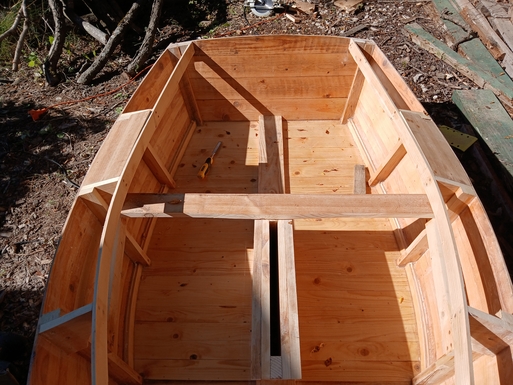
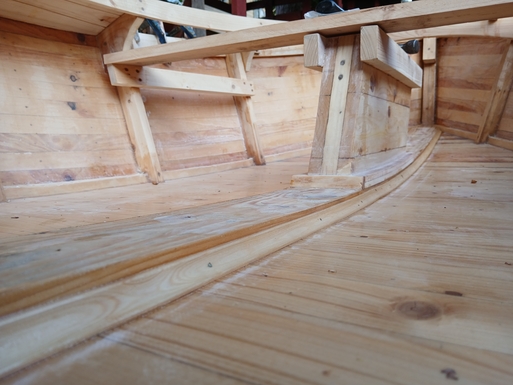
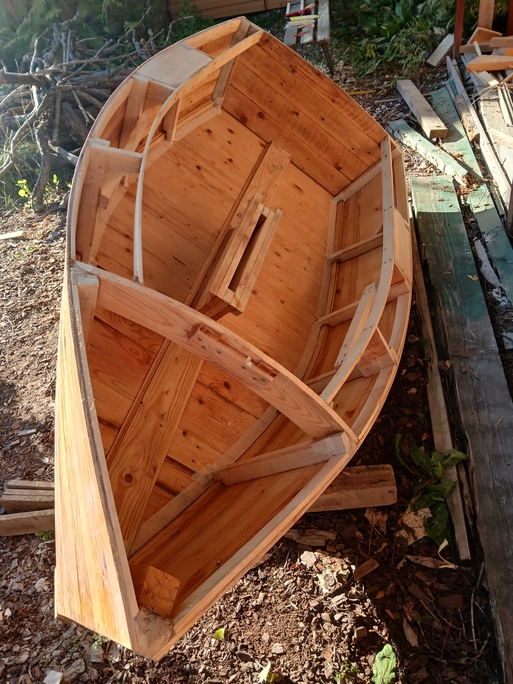
With those tasks completed the painting materials also arrived. But before painting and especially since the scheme I had in mind was rather complicated I took some time to apply masking tape around the parts that were supposed to be painted. About 50 meters of masking tape it turned out…
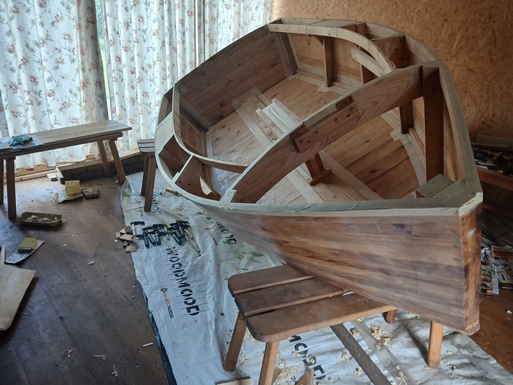
The following couple of weeks saw me applying four coats of primer - using a brush to apply a layer and then a roller to spread it out evenly. Since a single layer takes some time to dry (and the actual consumption of primer for the hull inside wasway less than the can volume was) I decided to prime the hull bottom too. But before that one final detail was needed: a skeg.
I built it out of a 2-by-4 by first levelling the upside hull itself and then levelling the skeg piece on the keel and transferring the hull bottom curvature onto it on both sides. Then saw slits into the piece every few centimeters before chiseling to shape
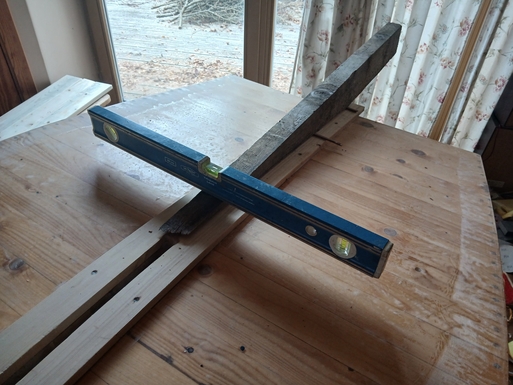
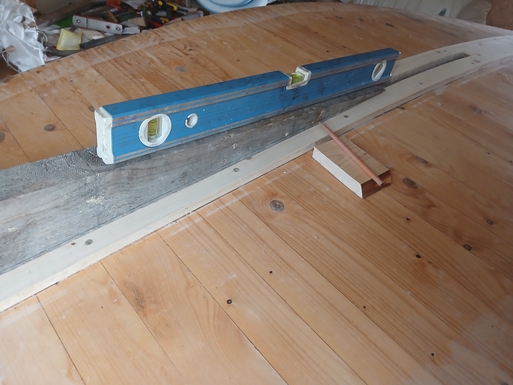
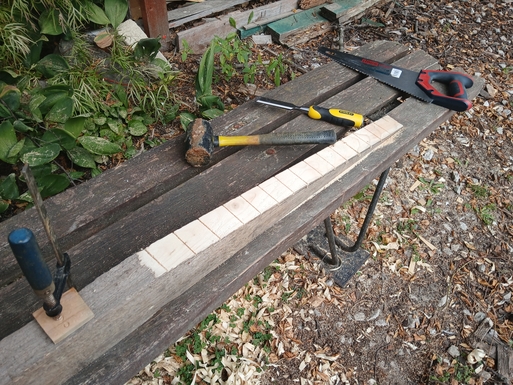
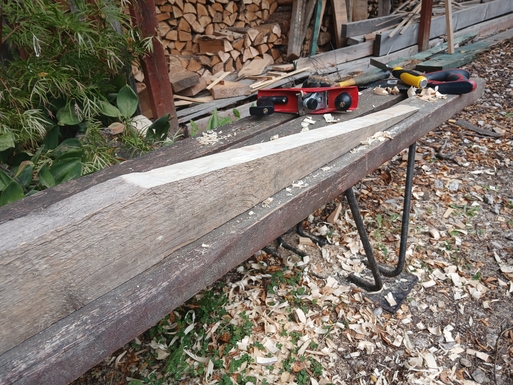
Before installing the skeg I cut it also to length and sanded smooth. It was fixed with (variable length) screws from the bottom with generous amounts of epoxy between the skeg piece and keel. In hindsight I should have sawn the keel aft to final length too as it would have been way easier than with the skeg in place, but could not decide how to measure the length nor angle how to go about it. I’ll leave this for later…
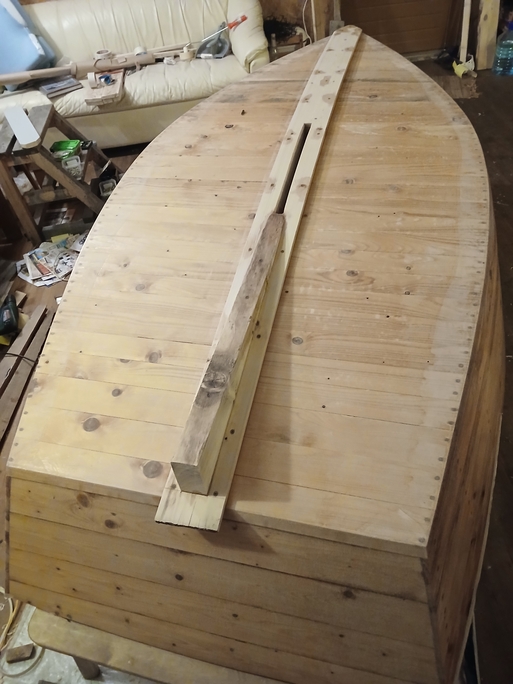
The hull bottom received also four coats of primer (and way less masking tape around the chines). Since the primer takes some time to cure before being “safe to touch”, the best paln seemed to be that in the morning first thing do the inside bits, flip the hull upside down and add a primer layer on the bottom and then leave to dry. Repeat the following day. And the day after that. Depending on the weather though (colder days or higher relative humidity) there might have been a day or two in between continuing with the next layer.
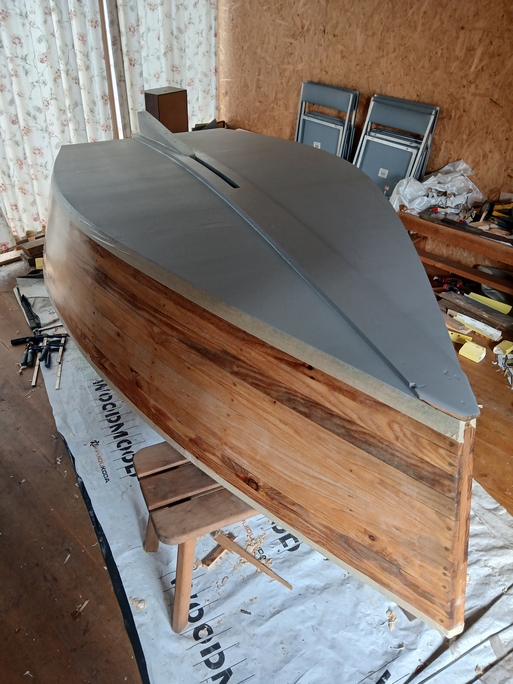
At the same time I didn’t want to prolong the drying process for very long because I became suspicious if I can manage to get the masking tape off from the inside without pulling bits of the paint layers off with it - remember, the primed parts will receive a few coats of paint too. Luckily all went okay and three coats of red paint later the masking tape came off very nicely
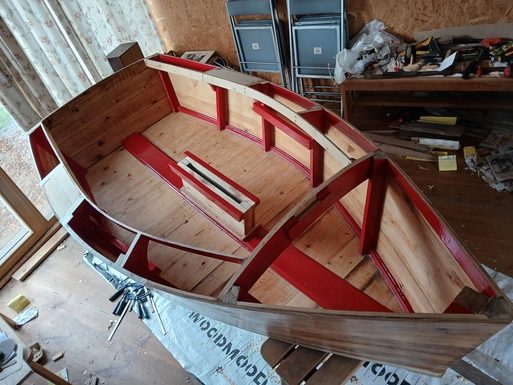
The final paint-task was to apply a few coats of clearcoat varnish thouroughly on the hull inside. The bottom was pretty straight forward to manage, but decided the hull sides are easier to varnish if the hull is tilted on the respective side so there is less flow / dripping.
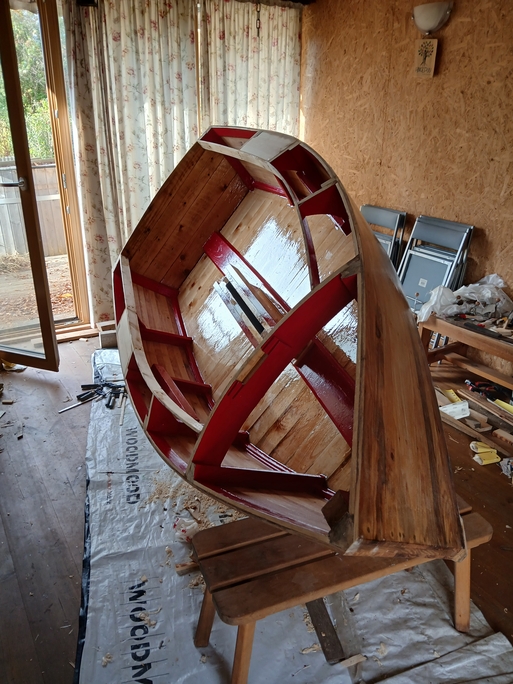
The last tasks for this build season saw the final fix of the mid-ship seat and laminating the decking. As discussed before, the seat will also serve as a cross sectional support, but I decided to install it only after painting because it would have been very tedious to do the paintwork with the seat in place. In the same way - laying out the decking will make it rather difficult to fix the seat boards (as well as obscure the painting process). Then again laminating the decking (plywood strips put sideways) would dirty the freshly painted surfaces and seat planks so I ended up covering the most vulnerable parts of the hull in newspapers
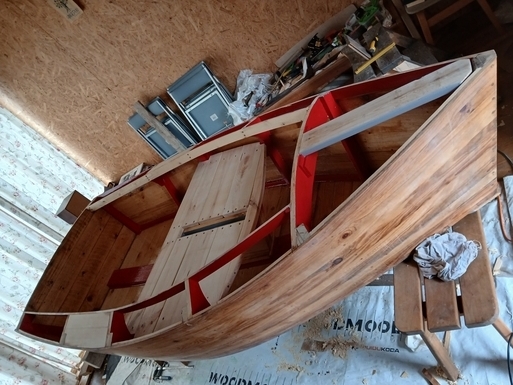
In order for the first strip of decking to go in place I needed the sheer molding to be fixed in place too. Since the pieces I found where only ~2.5m in length, but the length I needed was a it more than 2.70m I ended up scarf jointing the pieces to the required length. To make the joinery bevelling easier I built a simple rig with a baseboard, fixed sides at 1:9 angle (1 unit in thickness to 9 units in length) and a plate on top for securing the rig and securing a piece into the rig.
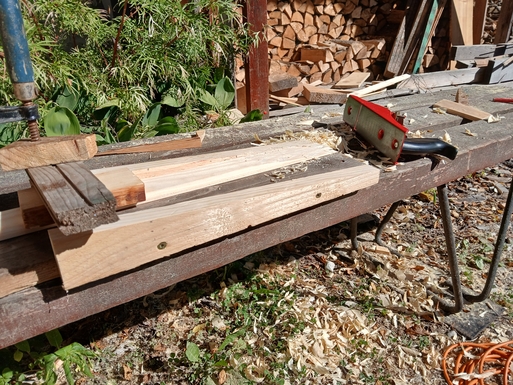
The joining parts were fixed with epoxy, left to cure, and sanded clean the next day before installing them to the hull with short bronze “molding-nails”.
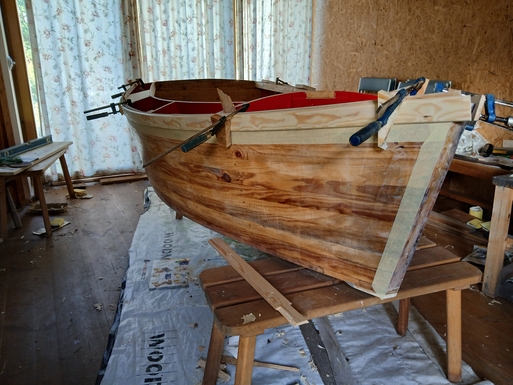
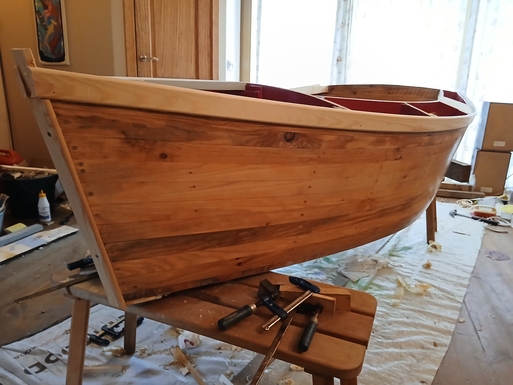
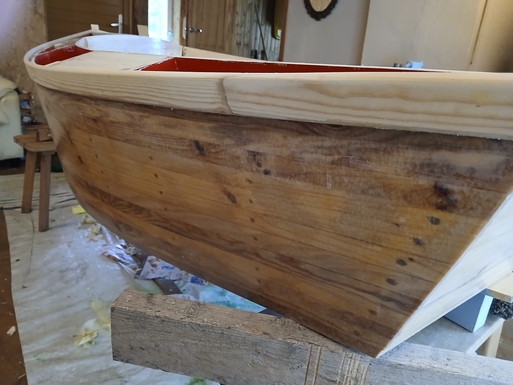
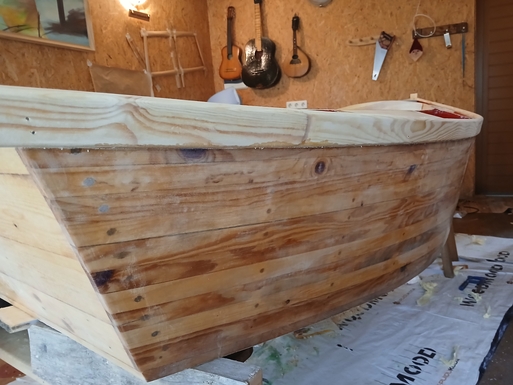
For decking I simply laid out the plywod strips side by side dead flat against supports and tightening them to the freshly in-place sheer molds. In the the end decided that I liked the layout where the central seam on top of the kingplank is less obvious - the gap between port and starboard side deck is smaller. This required some in-place chiseling and meant that every strip will have its specific location and cannot be interchangably used somewhere else.
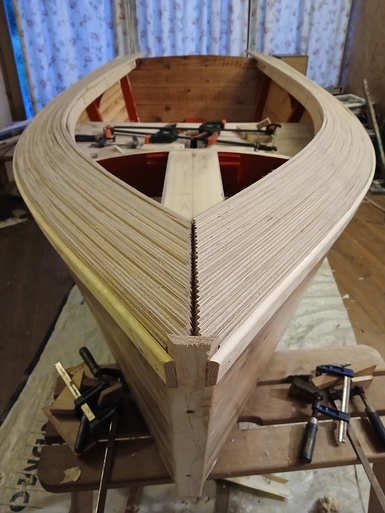
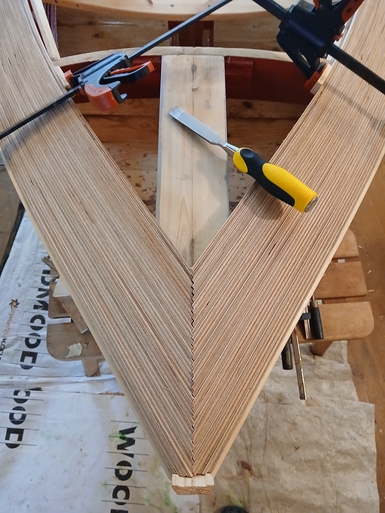
It took some time to do the newspaper-masking and working out the procedure how to fix the strips. In the end I decided to make use of the bronze nails i had for fixing the sheer molds. I would epoxy every strip to its neighbours and the support elements of the hull but also every 4-5 strips would hammer a nail into the supports so as to keep the strips immovable during installation. Also, guiding lines on the hull support elements every 5 strips help to determine if you need to tighten or relax the grip on the clamp screws.
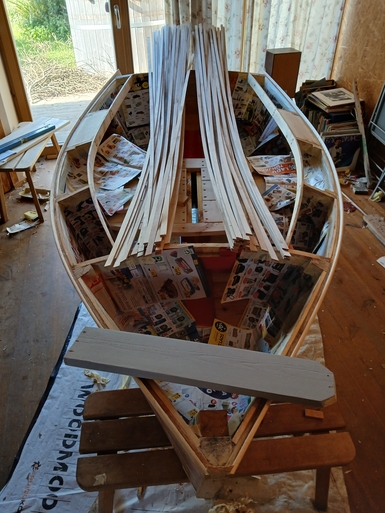
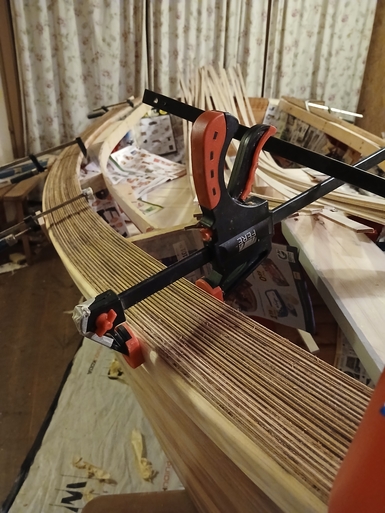
I managed to finish with the strips I had just a few days before the end of September. I’ll still have to rip a few more to finish it all. Just to have a peek at what the final would kind-of-look-like, I took some time to plane the installed laminate flat and I like the result..
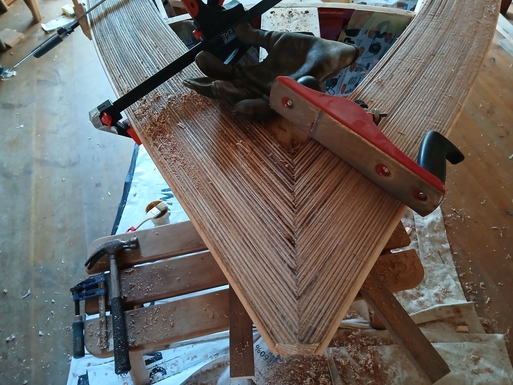
I like the reuslt but a thing that suddenly popped in my head is that this way I add quite a bit of weight to the vessel (above the waterline). Meaning I would have to plane the whole thing down as much as possible to reduce the risk of capsizing during bouting
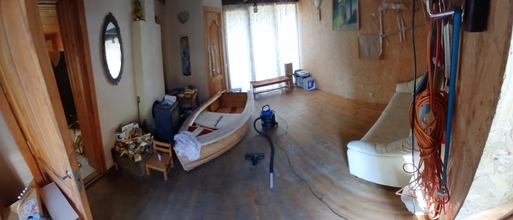
But this will be done sometime later because now I need to clear my build-space so I can fit funiture and things from the house in here as I will go into a longer period of home renovations, mainly due to the fact that I’m tearing up all lower floor floors to have central heating installed in there.